.png?width=3799&height=728&name=Dark_Logo_R-01%20(1).png "SignalPET")
Large multi-doctor practices report up to 12 scheduling conflicts every single day, creating a ripple effect of stress that touches every member of the team. If you've ever watched a perfectly planned morning dissolve into a sea of cranky clients and missed lunch breaks, you know that a full calendar doesn't always equal a productive one. Achieving true vet clinic scheduling efficiency requires more than just a faster typing speed or a new software update. It demands a pragmatic look at how patient demand actually intersects with your team's daily capacity.
This resource guide offers the data-driven strategies and benchmarks you need to eliminate bottlenecks and stabilize your patient flow. You'll discover how to reduce client wait times and improve technician utilization by using objective metrics rather than guesswork. We'll break down the practical steps to move away from fragmented communication and toward a predictable, organized environment where your staff can focus on medicine instead of managing chaos. It's time to turn your schedule back into a tool for success instead of a source of burnout.
Key Takeaways
- Learn why simply adding more appointment slots often backfires and how to align your team's actual capacity with daily patient demand.
- Use objective data and the GP Practice Benchmark Tool to transition from "gut feeling" scheduling to evidence-based clinical management.
- Master proactive techniques like the "Strategic Buffer" method to maintain vet clinic scheduling efficiency even when urgent cases or late arrivals occur.
- Foster a sustainable scheduling culture by implementing non-judgmental feedback loops that treat efficiency as a collective team effort rather than a management mandate.
Understanding the Scheduling Gap in Veterinary General Practice
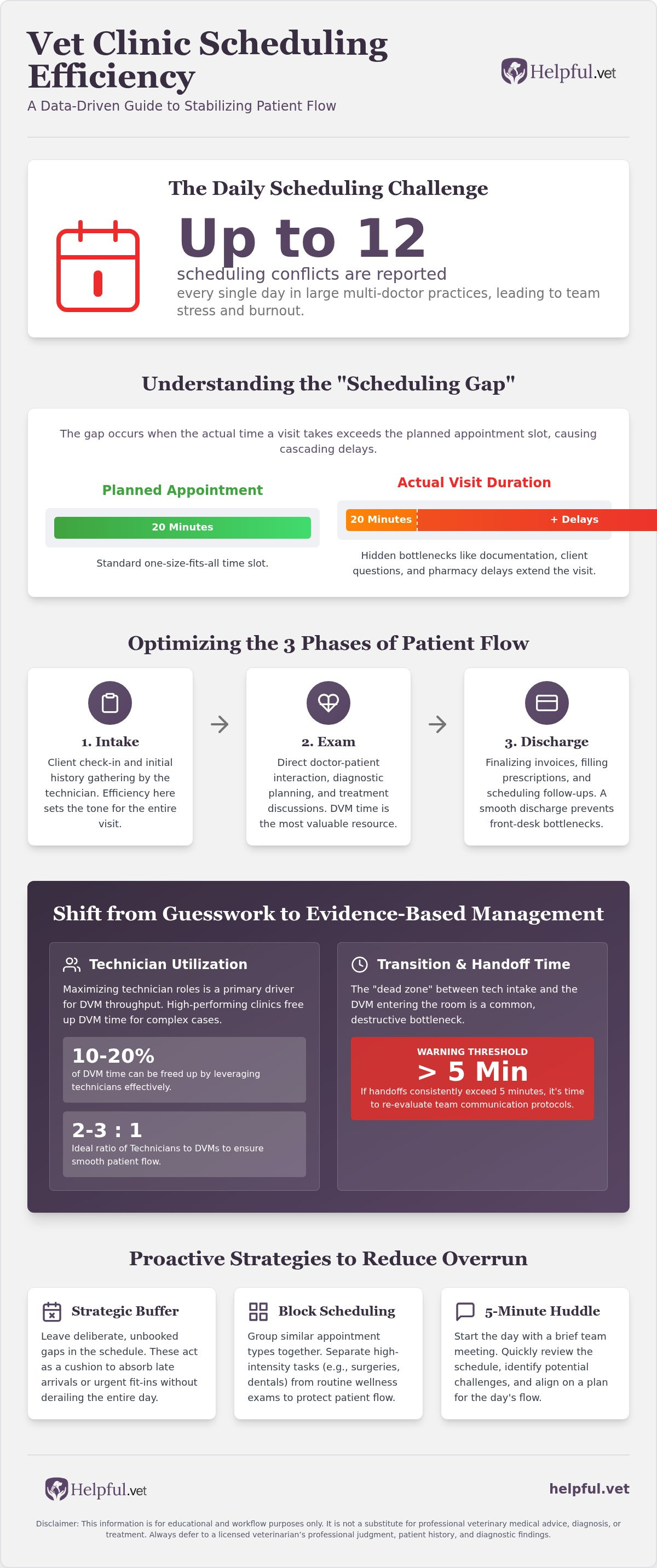
True vet clinic scheduling efficiency is the precise alignment of your team's availability with actual clinical demand. It isn't simply about filling every white space on the digital calendar; it's about ensuring the work fits the time allocated. Many GP teams try to solve delays by squeezing in more slots, but this often backfires. Without addressing the underlying workflow, more appointments just lead to longer wait times and higher staff turnover. When the "Scheduling Gap" occurs, the planned appointment time fails to meet the actual duration of the visit, causing a stressful ripple effect for the rest of the day.
Why Traditional Scheduling Fails GP Teams
Most general practices rely on one-size-fits-all blocks, such as standard 20-minute appointments for everything from a simple vaccine to a complex senior wellness exam. This rigid approach ignores the reality of hidden bottlenecks. Incomplete documentation, unexpected client questions, or pharmacy delays create "cascading delays" that eat into subsequent slots. Veterinary workflow studies suggest that inefficient clinics can lose significant time per appointment, which quickly adds up to hours of lost productivity and late finishes for the team.
The Role of Patient Flow in Scheduling
Scheduling doesn't exist in a vacuum. It's deeply connected to how patients move through your building. For a deeper look at these mechanics, review our vet clinic patient flow optimization guide. Every visit consists of three distinct phases:
- Intake: Client check-in and initial history gathering by the technician.
- Exam: The direct doctor-patient interaction and diagnostic planning.
- Discharge: Finalizing the invoice, filling prescriptions, and scheduling follow-ups.
Leveraging Benchmarks to Optimize Appointment Flow
Relying on gut feelings to manage a busy schedule often leads to inconsistency and staff frustration. Objective data provides the clarity needed to improve vet clinic scheduling efficiency without guessing where the time disappears. By using the GP Practice Benchmark Tool, teams can identify specific areas where the workflow stalls. Measuring metrics like revenue per appointment and DVM exam time helps quantify performance. Technician utilization, which measures the percentage of a technician's total skill set actually used during a shift, serves as a primary driver for DVM throughput.
Technician Utilization Benchmarks
High-performing GP clinics prioritize maximizing technician roles to free up 10 to 20 percent of DVM time for complex cases. When technicians handle history taking, diagnostic collection, and initial client education, doctors can focus on diagnosis and surgery. You should aim for a ratio of at least two to three technicians per DVM to ensure the doctor isn't waiting for a patient or a prepped room. This structure is essential for maintaining vet clinic scheduling efficiency during peak wellness seasons.
Measuring Transition and Handoff Times
One of the most common bottlenecks is the dead zone between the technician finishing the intake and the veterinarian entering the exam room. These minutes are often invisible but highly destructive to the daily flow. You can use a simple timer to audit these gaps over a one-week period to see where handoffs fail. If you find that transitions consistently exceed five minutes, it's time to re-evaluate your team's communication protocols. For more practical tips on clinical optimization, consider joining our veterinary management community for regular updates.
Practical Strategies for Reducing Appointment Overrun
Managing a clinic requires more than just filling every available slot. Proactive techniques are vital for maintaining vet clinic scheduling efficiency and preventing a chaotic work environment. The "Strategic Buffer" method involves leaving deliberate, unbooked gaps in the schedule to absorb late arrivals or urgent fit-ins. Similarly, "Block Scheduling" separates high-intensity tasks like surgeries or complex diagnostics from routine wellness exams. This prevents a difficult dental procedure from derailing an entire afternoon of wellness visits. For a step-by-step breakdown of these tactics, see our How to Reduce Appointment Overrun guide.
The Power of the 5-Minute Huddle
Morning huddles are your team's best defense against daily chaos. Spend five minutes each morning identifying "landmines" in the schedule, such as a known aggressive patient or a complex multi-pet visit, before they explode. Use this time to assign specific roles based on current staffing levels. If a technician is out sick, reassigning tasks immediately prevents bottlenecks before they start. This short meeting ensures the team moves with a shared purpose rather than reacting to problems as they arise.
Client Communication as a Scheduling Tool
Effective communication starts well before the patient enters the building. Using digital pre-visit forms can reduce check-in time by approximately 30 percent. When owners provide history and concerns in advance, the intake process is streamlined, allowing the clinical team to move straight to the exam. You can evaluate your team's current effectiveness with the Client Communication Score tool. Setting clear expectations early prevents the "while I'm here" questions that often threaten your vet clinic scheduling efficiency. To stay updated on more clinical workflow resources, join our community of veterinary professionals.
Building a Sustainable Scheduling Culture
Long-term vet clinic scheduling efficiency depends on a culture where every team member feels responsible for the daily flow. It's not a top-down mandate but a collaborative effort that requires buy-in from both the front and back of the house. When the schedule inevitably breaks down due to an emergency or a complex case, avoid the blame game. Instead, implement non-judgmental feedback loops to analyze exactly where the plan diverged from reality. A calm clinic environment starts with a respected schedule.
Empowering the Front Desk Team
Your Client Service Representatives (CSRs) act as the primary gatekeepers of your clinical day. Empower them with clear, written triage guidelines so they have the authority to protect the schedule from unnecessary disruptions. Training your front desk staff to recognize when to offer a drop-off appointment instead of a traditional in-room slot can prevent the lobby from overflowing. This flexibility allows the medical team to work through diagnostics during natural lulls rather than under the immediate pressure of a waiting client.
Continuous Improvement Through Self-Checks
Speed should never come at the expense of patient safety or clinical excellence. Use the Standard of Care Self-Check to ensure your clinical quality remains high even as your appointment pace increases. It's also helpful to set a quarterly review of your scheduling benchmarks to adjust for seasonal fluctuations, such as the heavy volume seen during heartworm prevention season. For ongoing operational tips and practical team training resources, subscribe to the Helpful.vet Newsletter to keep your clinic's efficiency gains consistent throughout the year.
Moving from Chaos to Clinical Consistency
Improving your clinic's workflow is a continuous process of matching capacity with demand. By adopting objective benchmarks and implementing strategic buffers, you can eliminate the bottlenecks that lead to staff burnout and client frustration. Sustainable vet clinic scheduling efficiency isn't just about better software; it's about building a team culture that values time management as much as medical excellence. Small, data-driven adjustments to your daily routine can prevent the cascading delays that often derail a productive shift.
We provide interactive workflow tools designed by veterinary professionals and data-driven benchmarks specifically for GP clinics to help you refine these operational processes. These resources provide the clarity needed to make smarter staffing decisions every day. To stay current with the latest strategies and receive practical clinical management tips, join our newsletter for weekly clinic efficiency tips. You have the power to transform your daily flow and create a more predictable, supportive environment for your entire team.
Frequently Asked Questions
How do I know if our clinic needs a scheduling overhaul?
Persistent overtime, missed lunch breaks, and a backlog of unsent lab results are clear indicators that your system is failing. If your team feels like they're "firefighting" every afternoon, your current workflow isn't sustainable. You should audit your wait times; if clients regularly sit in the lobby for more than 15 minutes past their appointment time, your vet clinic scheduling efficiency has likely collapsed.
What is the ideal appointment length for a general practice?
There's no universal ideal length, but high-performing GP clinics often utilize staggered slots based on visit type. While a standard wellness exam might fit into 20 minutes, complex cases or new client visits often require 30 to 40 minutes. The key is using objective data to determine your DVM's actual exam speed and building the schedule around those specific performance benchmarks.
Can technician-led appointments really improve our efficiency?
Yes, technician-led appointments for routine tasks like blood draws, suture removals, and booster vaccines significantly increase DVM throughput. By shifting these low-complexity tasks to qualified support staff, you free up the doctor's time for diagnostic work and surgery. This delegation is a core component of vet clinic scheduling efficiency because it utilizes the full skill set of every team member during the shift.
How do we handle late clients without ruining the rest of the day?
Establish a firm late arrival policy that's communicated clearly at the time of booking. If a client is more than 10 or 15 minutes late, offer to convert the visit to a drop-off or reschedule them for a later time. This protects the appointments of clients who arrived on time and prevents a single delay from cascading through your entire afternoon schedule.
Is it better to use block scheduling or open scheduling for GP?
Block scheduling is generally superior for general practice because it creates dedicated time for specific clinical activities. Reserving blocks for surgeries, dental procedures, and high-intensity work prevents these long tasks from bleeding into wellness slots. Open scheduling often leads to a chaotic mix that makes it difficult for the team to find a steady rhythm or take necessary breaks.

Article by
The Helpful.vet Team
The Helpful.vet Team creates practical resources, tools, and checklists for busy general practice veterinary teams. Our content focuses on clinic workflow, client communication, benchmarks, practice efficiency, and everyday tools that help veterinary professionals work with more clarity.
Disclaimer
Helpful.vet provides educational and workflow-related information for veterinary professionals. Content on this site does not provide medical advice, diagnosis, or treatment recommendations and should not replace the judgment of a licensed veterinarian. Clinical decisions should always be made using patient-specific history, examination findings, diagnostics, applicable guidelines, and professional judgment.