.png?width=3799&height=728&name=Dark_Logo_R-01%20(1).png "SignalPET")
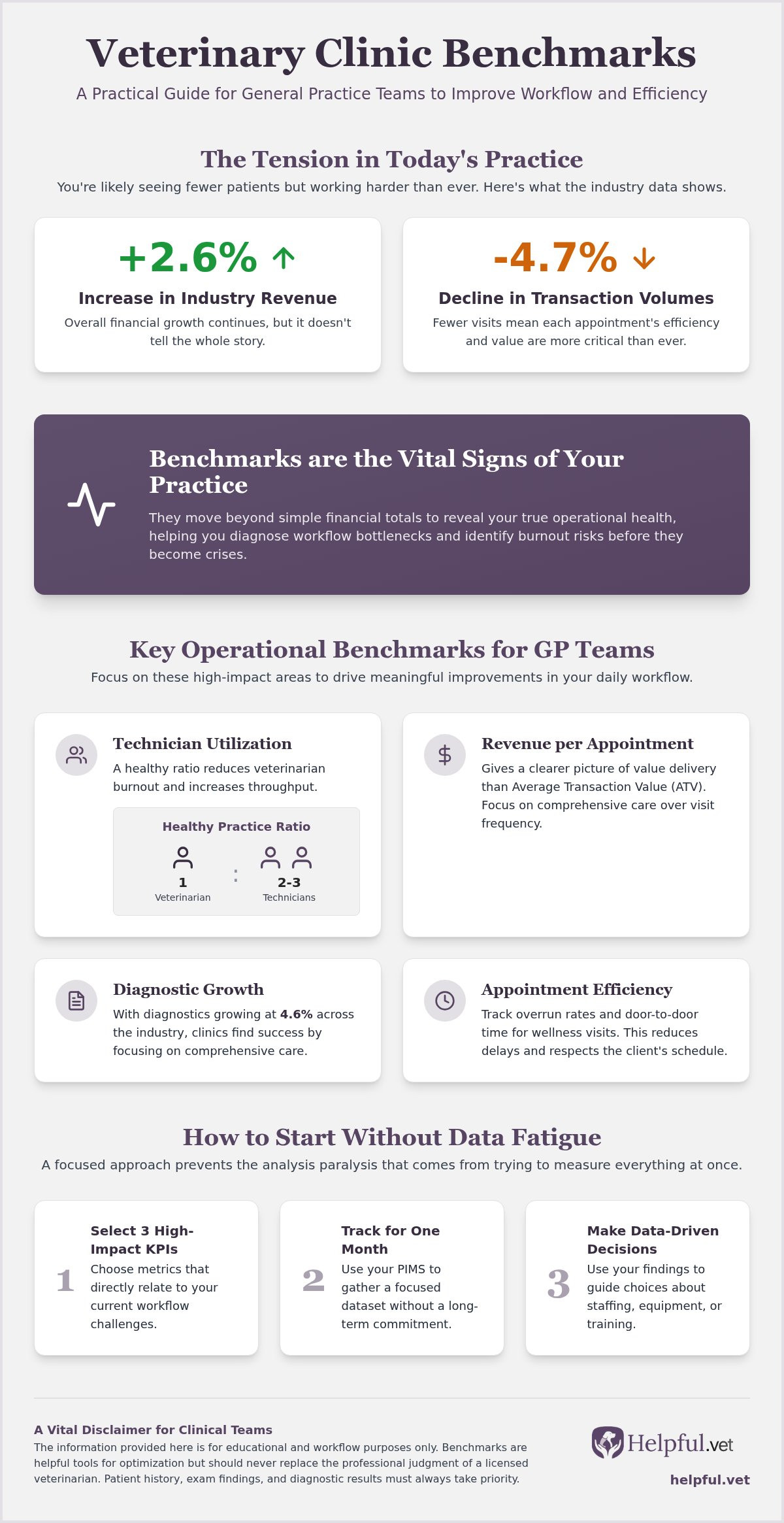
Did you know that despite a 2.6% increase in industry revenue, veterinary transaction volumes actually fell by 4.7% over the last year? Most GP teams feel this tension every day. You're likely seeing fewer patients but working harder than ever, which often leaves you wondering if your veterinary clinic benchmarks are hitting the right marks. It's frustrating to feel constantly behind schedule while questioning if your revenue per appointment or technician utilization is truly at a healthy level.
We'll show you how to use these industry standards to evaluate your performance and find realistic workflow improvements that fit your specific practice. This guide breaks down the essential metrics for general practice teams, focusing on diagnostic growth and efficiency. You'll learn how to identify workflow bottlenecks and implement practical steps that empower your team to provide high-quality care without the data fatigue.
Key Takeaways
- Understand how veterinary clinic benchmarks serve as vital signs for your practice workflow, helping you distinguish between simple financial totals and true operational health.
- Focus on metrics that measure technician utilization and revenue per appointment to ensure your nursing team is working at the top of their professional license.
- Avoid data fatigue by selecting three high-impact KPIs to track through your PIMS for a single month rather than attempting to measure everything at once.
- Use your findings to make data-driven decisions about hiring new staff, investing in equipment, or improving standard of care compliance.
- Transform raw data into practical workflow improvements that reduce the daily stress of feeling constantly behind schedule.
What Are Veterinary Clinic Benchmarks and Why Do They Matter?
Benchmarks act as clinical vital signs for your practice. In the veterinary profession, we often focus on the health of our patients, but the health of our workflow is just as critical to providing sustainable care. At their core, veterinary clinic benchmarks are standard reference points used to evaluate how your clinic performs compared to industry peers and your own historical data.
While many managers focus strictly on financial benchmarks like gross revenue or cost of goods sold, operational benchmarks offer a deeper look into the daily grind. These metrics track technician utilization and appointment efficiency. They help you identify burnout risks and bottlenecks before they turn into staffing crises. Think of benchmarking as a diagnostic process. It identifies the symptoms of a struggling workflow, but it still requires your clinical judgment to find and implement the right cure for your specific team. Successful independent practices, such as London Veterinary Surgeries, show how prioritizing these operational insights can help maintain award-winning standards over decades of service.
The Purpose of Benchmarking in General Practice
Using data from authoritative bodies like the AVMA and AAHA allows you to see where you stand in the current market. This comparison helps you identify where your team excels and where small adjustments could reduce friction. By looking at these numbers, you can set realistic goals for the next year that challenge the team without overwhelming them. You can use our gp practice benchmark tool to see how your clinic compares to current industry standards.
A Vital Disclaimer for Clinical Teams
The information provided in this guide is for educational and workflow purposes only. While veterinary clinic benchmarks are helpful tools for optimization, they should never replace the professional judgment of a licensed veterinarian. Every patient is unique. Patient history, physical exam findings, and diagnostic results must always take priority over operational metrics or industry averages.
Key Operational Benchmarks for Every Veterinary Clinic
Looking at a profit and loss statement tells you if the clinic is making money, but it doesn't tell you why the team feels exhausted by mid-afternoon. Effective veterinary clinic benchmarks focus on operational flow rather than just bottom-line totals. By using benchmarking as a management tool, you can see if your revenue is coming from high-volume burnout or high-value clinical care. In 2026, where transaction volumes have declined by 4.7%, focusing on what happens during each visit is more important than simply squeezing more appointments into the day.
Technician Utilization and Task Delegation
Your nursing team is the engine of the practice. High technician utilization reduces veterinarian burnout and increases total throughput. For general practice teams, a healthy ratio is typically two to three technicians for every one veterinarian. When your ratio is lower, your doctors often perform tasks like blood draws or rooming patients. This slows down the entire schedule and limits the number of patients you can help. You can find more specific details on optimizing these ratios in our guide on Veterinary Practice Data Insights.
Revenue and Efficiency Metrics
Average Transaction Value (ATV) is a common metric, but Revenue per Appointment gives a clearer picture of value delivery. With diagnostics growing at 4.6% across the industry, clinics are finding success by focusing on comprehensive care rather than visit frequency. Tracking appointment overrun rates is also vital. If exams consistently exceed their scheduled slots, it creates a cascade of delays for the rest of the day. Aim for a door-to-door time for wellness visits that respects the client's schedule without rushing the clinical assessment. For practical steps on streamlining your daily schedule, see our article on how to improve vet clinic efficiency. If you're looking for more ways to support your team, consider joining our clinical community newsletter for regular updates.
How to Implement Benchmarking Without Data Fatigue
The goal of tracking veterinary clinic benchmarks isn't to turn your practice manager into a data scientist. It's about gaining enough clarity to make better decisions for your team. Start small by picking three high-impact KPIs to track for just one month. This focused approach prevents the analysis paralysis that happens when you try to measure everything at once. Use your PIMS to automate as much data collection as possible so you aren't stuck manually counting files.
Once you have your numbers, schedule a brief monthly Pulse Check with your leadership team. Keep these meetings under 20 minutes and focus strictly on the results. If a metric shows a decline, avoid using shaming language or looking for someone to blame. Instead, focus on the why behind the numbers. A dip in revenue per appointment might simply mean you had a week full of quick rechecks rather than a drop in clinical standards.
A Step-by-Step Framework for GP Clinics
Implementing a new system works best when it follows a predictable path. You can use this three-step framework to get started:
- Step 1: Identify your biggest pain point. Are clients complaining about long wait times? Is your dental compliance lower than you'd like? Start where it hurts most.
- Step 2: Establish your baseline. Gather 90 days of historical data from your own records. This gives you a realistic starting point that accounts for your specific team's rhythm.
- Step 3: Compare to the industry. Use a resource like our GP Practice Benchmark Tool to see how your baseline stacks up against national averages.
Avoiding Common Data Pitfalls
Context matters when you're looking at numbers. Don't compare a small rural GP to a large urban specialty hospital; the overhead and case mix are too different to be useful. You should also account for seasonal variations. It's normal to see a spike in preventative care during heartworm season and a shift toward pediatric cases during kitten season. Focus on trends over three to six months rather than reacting to a single bad week. If you want more practical tips delivered to your inbox, sign up for our veterinary workflow newsletter.
Moving from Data to Action: Improving Your Workflow
Data is only as valuable as the changes it inspires in your daily practice. When you track veterinary_clinic_benchmarks, you aren't just filling out spreadsheets; you're building a case for a better work environment. For example, if your data shows that technician utilization is consistently over capacity, you have the objective evidence needed to justify hiring a new nursing team member. This shifts the conversation from a vague feeling of being "too busy" to a logical business decision based on clinical capacity and team health.
Using these metrics also helps bridge the gap between operations and the medicine you practice. If your revenue per appointment is lower than industry standards despite high patient volume, it often points to a breakdown in client communication or "Standard of Care" compliance. Benchmarks help you identify where recommendations are being missed, allowing the team to work smarter by focusing on comprehensive care for the patients already in the building. It's about creating a rhythm where the team feels supported and the patients receive the thorough diagnostics they deserve.
Practical Next Steps for Your Team
Transitioning from tracking to acting doesn't have to happen overnight. You can start by using these practical resources to guide your team's next steps:
- Review your Standard of Care Self-Check to see if operational bottlenecks are affecting your medical delivery.
- Visit the Helpful.vet Tools page for interactive calculators that handle the math for you.
- Sign up for Helpful.vet News to stay informed on 2026 industry trends and workflow tips.
Conclusion: The Smart Clinical Sidekick Approach
Tracking veterinary_clinic_benchmarks is a path toward a more organized and less stressful clinic environment. By focusing on the metrics that actually impact your workflow, you can move away from the daily chaos and toward a more sustainable practice model. We're here to act as your data-driven mentor, providing the tools you need to support your team and your patients. All information provided in this guide is for educational and workflow purposes only and does not replace the professional judgment of a licensed veterinarian.
Empowering Your Practice Through Practical Data
Managing a clinic in 2026 requires a shift in focus. With transaction volumes down by 4.7 percent across the industry, growth now comes from providing comprehensive care during every visit rather than simply increasing the appointment count. By tracking veterinary clinic benchmarks like technician utilization and revenue per appointment, you can identify exactly where your workflow needs adjustment. These metrics aren't just numbers; they're the roadmap to a more organized, less stressful environment for your entire team.
You don't need to be a data analyst to improve your practice health. Our interactive GP Practice Benchmark Tool is designed specifically for general practice teams, offering an easy way to measure performance without any corporate jargon. It helps you move from feeling behind schedule to making informed decisions that support your clinical standards. To stay updated on the latest workflow tools and industry trends, sign up for our clinical community newsletter. We're here to help you work smarter and keep your focus where it belongs: on the patients in your care.
Frequently Asked Questions
What are the most important KPIs for a small veterinary clinic to track?
The most critical KPIs for a small clinic are Revenue per Appointment and Technician Utilization. While gross revenue is a common metric, it doesn't reveal the true efficiency of your team. Tracking these operational veterinary clinic benchmarks helps you understand if you're delivering high-value clinical care or simply rushing through a high volume of low-value visits. Focusing on these two areas provides the clearest picture of your workflow health.
How often should our veterinary practice review its benchmarks?
You should conduct a brief monthly review of your primary operational metrics. This monthly pulse check allows you to catch workflow bottlenecks before they become ingrained habits. Quarterly reviews are better for identifying long-term seasonal trends, such as the typical shift in patient types between spring and winter months. Consistent tracking ensures that small declines in efficiency don't turn into major practice crises over time.
What is a healthy revenue per appointment for a general practice in 2026?
A healthy revenue per appointment in 2026 is one that reflects comprehensive medical care rather than just high visit volume. Industry trends show a structural shift toward diagnostics and medical services, which grew by 4.6 percent recently. Your specific target should be higher than your baseline from 2025, accounting for the 7.5 percent average transaction charge increase seen across the profession over the last year.
How can I improve my technician utilization rate?
Improving technician utilization starts with delegating clinical tasks that don't legally require a veterinarian's license. Aim for a ratio of at least two technicians for every one doctor on the floor. When technicians handle blood draws, patient histories, and client education, it frees the veterinarian to focus on diagnostics and surgery. This shift increases clinic throughput and reduces the feeling that the team is constantly behind schedule.
Does benchmarking my clinic require expensive software?
You don't need expensive or complex software to begin tracking veterinary clinic benchmarks. Most modern Practice Information Management Systems (PIMS) already collect the raw data you need for basic reporting. You can export this data into a simple spreadsheet or use interactive tools like our GP Practice Benchmark Tool to compare your results against current industry averages without the need for a costly consulting contract or high software fees.

Article by
The Helpful.vet Team
The Helpful.vet Team creates practical resources, tools, and checklists for busy general practice veterinary teams. Our content focuses on clinic workflow, client communication, benchmarks, practice efficiency, and everyday tools that help veterinary professionals work with more clarity.
Disclaimer
Helpful.vet provides educational and workflow-related information for veterinary professionals. Content on this site does not provide medical advice, diagnosis, or treatment recommendations and should not replace the judgment of a licensed veterinarian. Clinical decisions should always be made using patient-specific history, examination findings, diagnostics, applicable guidelines, and professional judgment.